India’s Truck Driver Shortage: The Problem Isn’t Just “Finding Drivers” — It’s Keeping Them
22 Dec 2025
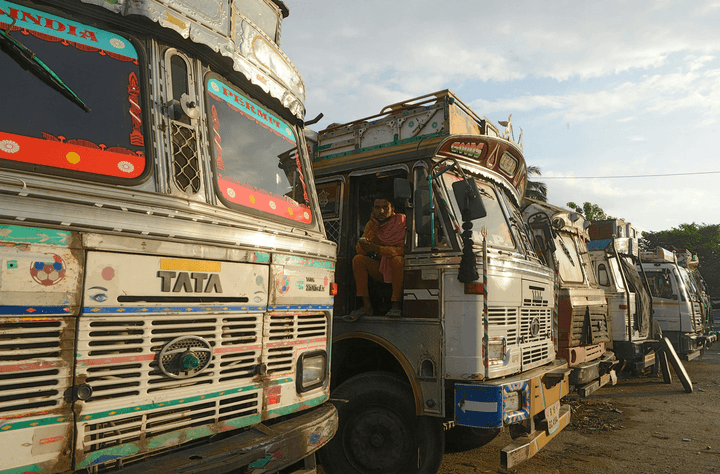
It’s 6:30 in the evening, and the yard is still noisy.
One truck is loaded, the tarpaulin is tied, and the papers are ready.
The customer wants an ETA.
The fleet manager wants the truck out.
And then comes the line you’ve probably heard too many times:
“Truck toh hai… driver nahi.”
In India, the truck driver shortage doesn’t feel like a statistic.
It feels like a daily interruption.
Plans change. Calls pile up.
And the same few drivers get stretched thinner every week.
Industry voices estimate that the long-haul truck-to-driver ratio has dropped to around 55 drivers for every 100 trucks, down from 75:100 just a few years ago.
The Shortage Shows Up in Small Moments
A driver says he’ll leave after unloading—but unloading takes eight hours longer than promised.
Another driver refuses a lane he’s driven a hundred times because he knows what that warehouse will do to his day.
A third driver quits quietly after a month, because the work feels unpredictable and the money doesn’t justify the strain.
When people talk about a “driver shortage,” it often sounds like a hiring problem.
On the ground, it’s a workday problem.
A Driver’s Day Is Not Made of Kilometres
A driver’s day isn’t defined by distance.
It’s defined by waiting.
The hardest part of trucking in India is often not driving.
It’s everything wrapped around the drive:
Waiting at loading points
Delays at unloading bays
Unplanned halts
Uncertainty about when the trip will actually end
Drivers can handle long distances.
What wears them down is long distance plus long, unpaid time.
When Uncertainty Becomes the Norm
Reports on road safety and working conditions in Indian trucking describe a familiar cycle:
Low pay combined with intense commercial pressure pushes drivers into long hours and quick turnarounds. Fatigue rises. Safety risks increase. Basic facilities—rest areas, washrooms, proper breaks—are often missing at loading and unloading points.
When this becomes normal, shortage becomes inevitable.
Fewer people want to enter the profession.
More people look for exits.
The Part Nobody Says Out Loud: Families Decide Too
In India, long-haul driving is rarely a solo decision.
It’s a family decision.
Families think about safety, health, dignity, and predictability.
If the work looks risky and unstable, younger people choose something else.
That’s how a profession slowly stops being aspirational—even when demand remains strong.
What the Shortage Really Costs (Beyond Recruitment)
When a driver isn’t available, it’s not just “one truck not moving.”
It triggers a chain reaction:
The truck sits idle, but the EMI doesn’t pause
Insurance and permits keep running
Fixed costs continue while revenue kilometres don’t
On the shipper’s side, the cost shows up as delayed deliveries, rushed replacements, and constant follow-ups.
Over time, everyone pays—through higher friction and higher cost.
What Actually Helps in India (And What Doesn’t)
There are two ways to respond to a shortage.
One: Hire harder—more ads, more referrals, bigger joining bonuses.
Two: Make the job something drivers can stay in.
The second approach is slower.
It’s also the one that works.
Start With Time
If you want drivers to stay, protect their time.
Most retention improvements don’t come from grand strategies. They come from boring operational fixes:
Smoother dock processes
Better appointment discipline
Fewer last-minute plan changes
A driver who finishes a trip thinking, “My time mattered,” is far more likely to take the next one.
Then Fix Predictability
Drivers don’t only want “more pay.”
They want pay that feels dependable.
Predictability comes from:
Clear trip-based pay structures
Transparent deductions
Honest lane planning that doesn’t quietly steal hours through waiting
When expectations match reality, trust builds.
And Don’t Ignore Dignity
The fastest way to lose a driver isn’t a competitor’s offer.
It’s repeated disrespect:
Being blamed for delays outside their control
Being left unsupported when plans break
Being told to “manage somehow” when the system fails
People don’t quit hard work.
They quit being treated as expendable.
Where AI Actually Fits (Without the Hype)
AI won’t replace drivers tomorrow.
But it can reduce the chaos that makes them quit.
In the Indian context, the most useful applications are practical, not flashy:
Identifying customers and locations that regularly cause delays
Planning trips that don’t collapse at the first exception
Reducing empty kilometres through smarter matching
Less chaos means fewer bad days.
Fewer bad days mean fewer resignations.
Closing Thought
India’s driver shortage won’t be solved by one hiring drive.
It improves when fleets and shippers build operations where:
Time is respected
Planning is realistic
The workday feels human
That’s how driving becomes something people stay in—
not something they’re trying to escape from.